

Buying a House in Washington, DC? 15 Things You Should Know Before Making an Offer
Real-life house-buying tips for Washington, DC, from practical layouts to parking, storage, and moving-day surprises.
Buying a home in Washington, DC, is a little different from buying a house in the suburbs.
In the suburbs, buyers often focus on the size of the yard, the school district, the driveway, and how the house sits on the lot.
But in DC? You might fall in love with a beautiful historic rowhouse, only to discover that your king-size bed won’t fit up the stairs, your basement has moisture problems, or finding parking after 6 PM feels like winning the lottery.
If you’re house hunting in Washington, DC, here are 15 practical things worth considering before making an offer.

1. Measure the Staircases, Not Just the Rooms
One of the biggest surprises for DC homeowners is how narrow some staircases can be.
Many older rowhouses were built long before oversized sectionals, king-size mattresses, and modern refrigerators became popular.
A bedroom might be large enough for your furniture, but can you actually get that furniture into the room?
Before buying, check:
- The width of the staircase and landings
- Tight turns between floors
- Doorway widths and ceiling clearance
- Whether large furniture can fit through the front entrance
- Access to upper floors
Moving tip: If you already own large furniture, measure it before falling in love with a house. Sometimes the problem isn’t the room. It’s getting there.
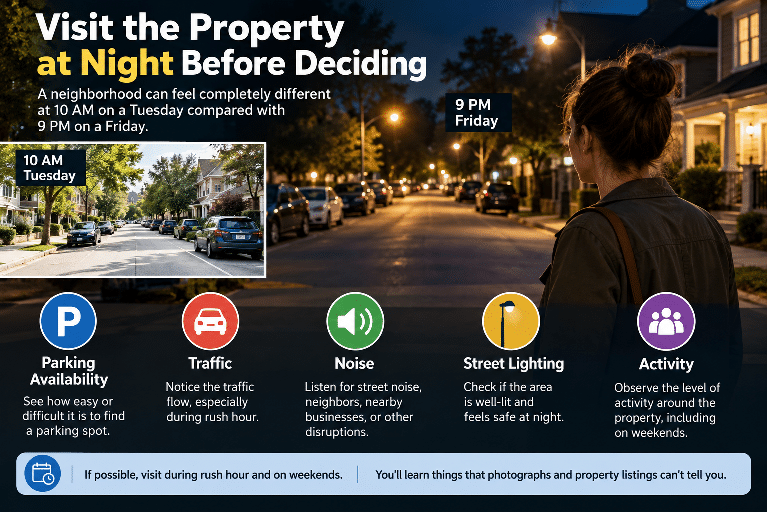
2. Visit the Property at Night Before Deciding
A neighborhood can feel completely different at 10 AM on a Tuesday compared with 9 PM on a Friday.
Visit the street at different times.
Pay attention to parking availability, traffic, noise, street lighting, and activity around the property.
If possible, visit during rush hour and on weekends.
You’ll learn things that photographs and property listings can’t tell you.
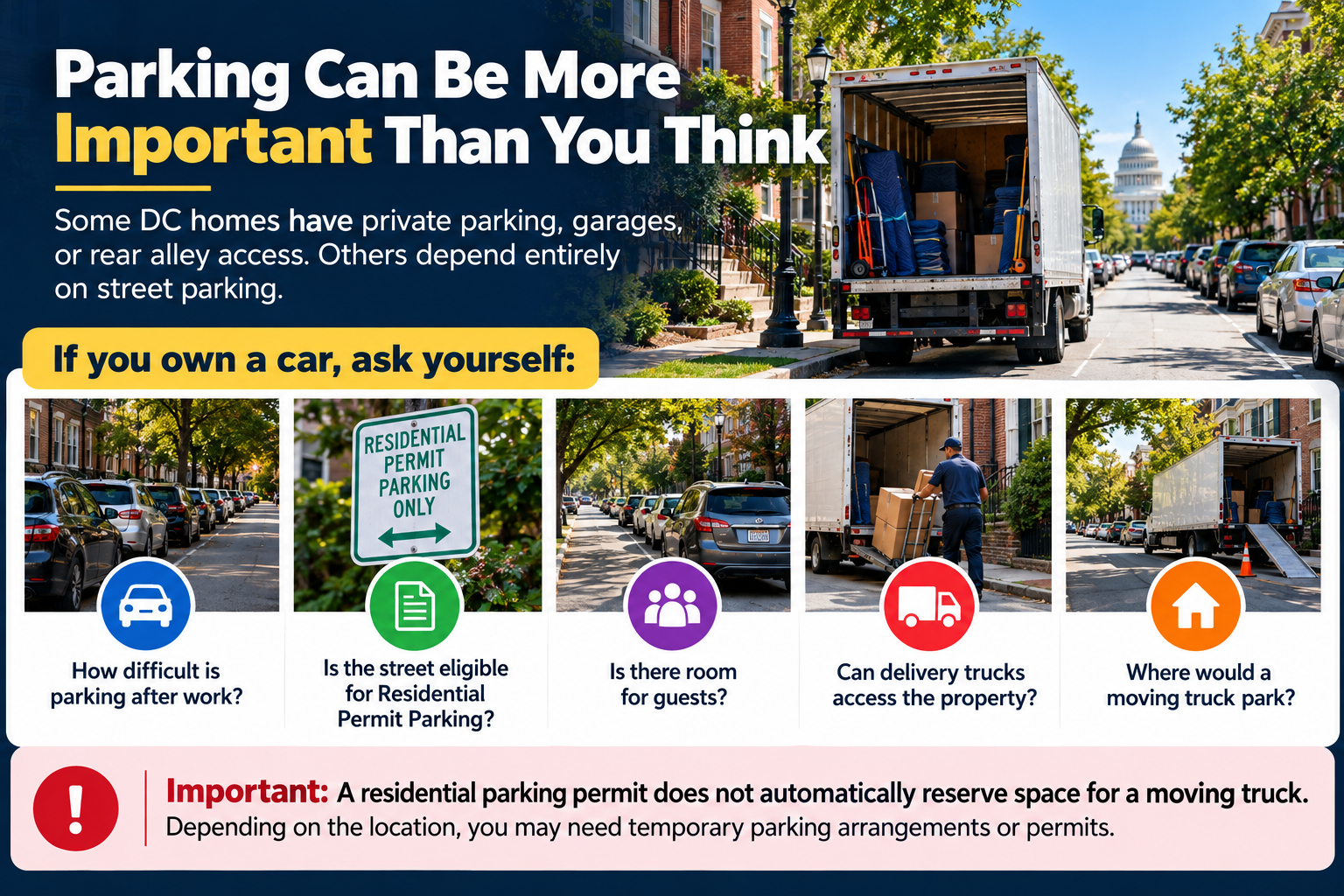
3. Parking Can Be More Important Than You Think
Some DC homes have private parking, garages, or rear alley access. Others depend entirely on street parking.
If you own a car, ask yourself:
- How difficult is parking after work?
- Is the street eligible for Residential Permit Parking?
- Is there room for guests?
- Can delivery trucks access the property?
- Where would a moving truck park?
Important: A residential parking permit does not automatically reserve space for a moving truck. Depending on the location, you may need temporary parking arrangements or permits.
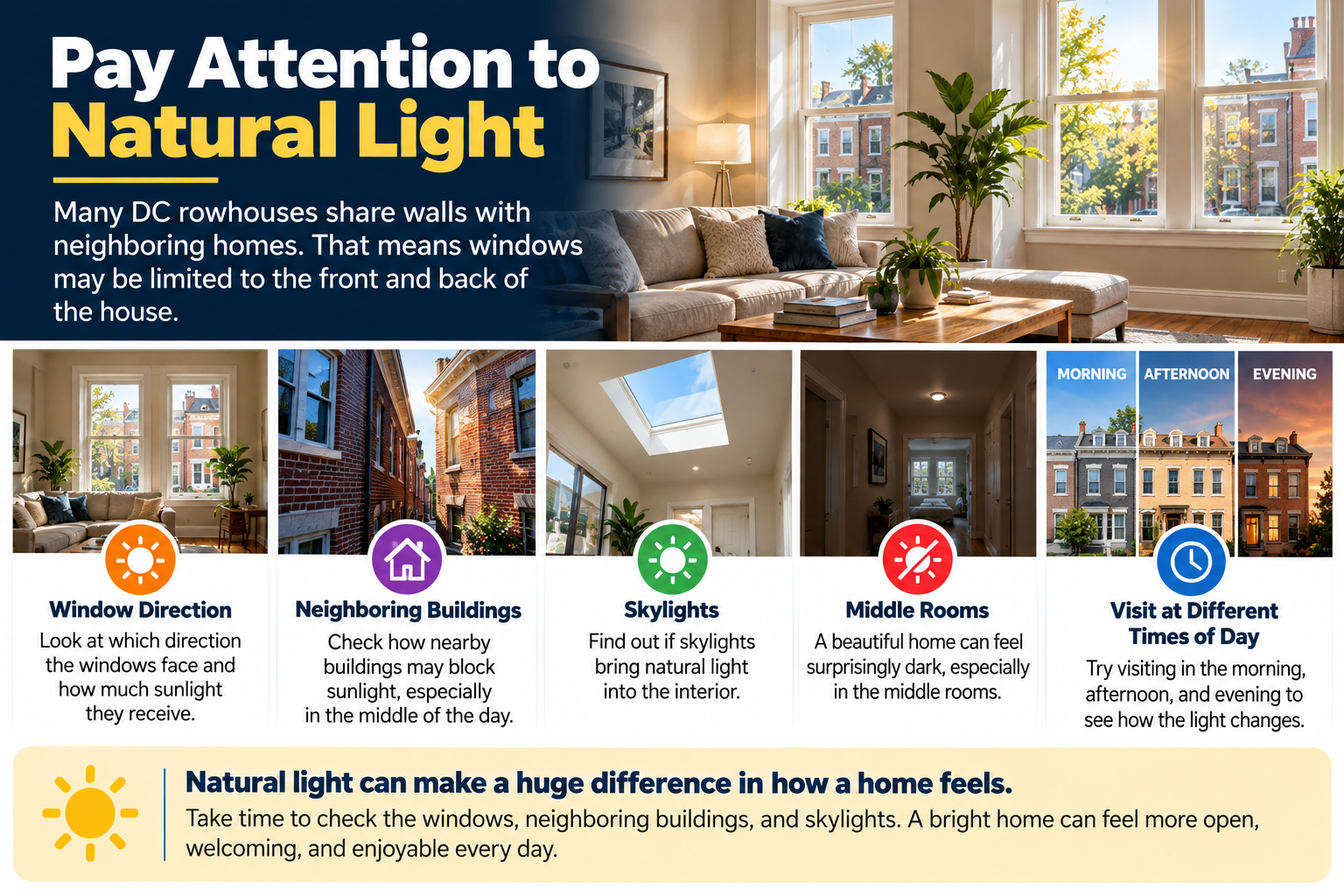
4. Pay Attention to Natural Light
Many DC rowhouses share walls with neighboring homes.
That means windows may be limited to the front and back of the house.
A beautiful home can feel surprisingly dark, especially in the middle rooms.
Look at the direction the windows face, how neighboring buildings block sunlight, and whether skylights bring light into the interior.
Try visiting at different times of day.
Natural light can make a huge difference in how a home feels.
5. Don’t Ignore Basement Moisture
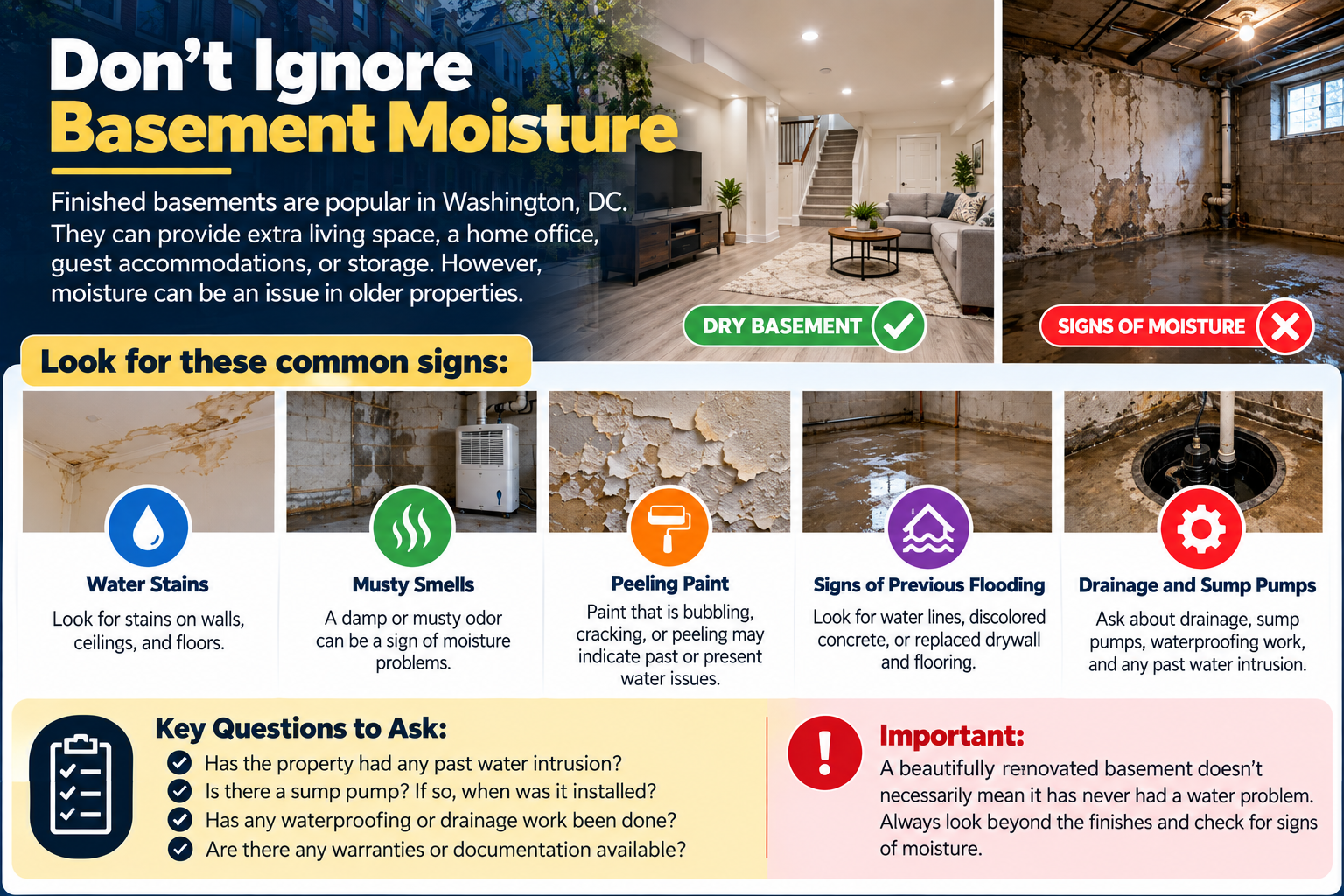
Finished basements are popular in Washington, DC.
They can provide extra living space, a home office, guest accommodations, or storage.
However, moisture can be an issue in older properties.
Look for water stains, musty smells, peeling paint, and signs of previous flooding.
Ask about drainage, sump pumps, waterproofing work, and past water intrusion.
A beautifully renovated basement doesn’t necessarily mean it has never had a water problem.
6. Think About How You’ll Use the House in 10 Years
That charming three-story rowhouse might be perfect today.
But what about when you’re carrying groceries, raising children, recovering from an injury, or helping an older family member?
Multiple flights of stairs can become inconvenient.
Consider the location of bedrooms, bathrooms, laundry facilities, and the kitchen.
A practical floor plan often matters more than total square footage.

7. Check the Actual Storage Space
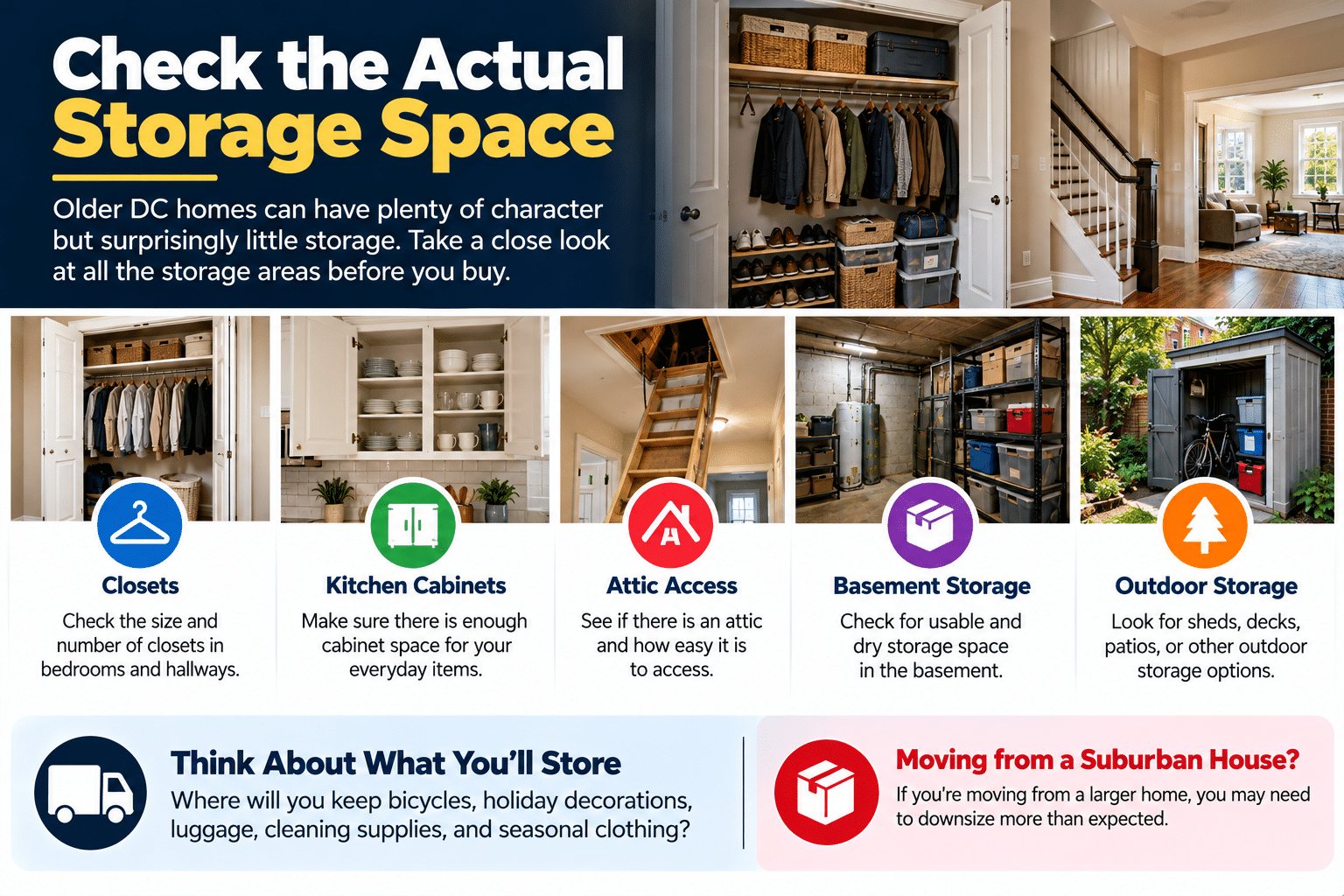
Older DC homes can have plenty of character but surprisingly little storage.
Pay attention to closets, kitchen cabinets, attic access, basement storage, and outdoor storage.
Think about where you’ll keep bicycles, holiday decorations, luggage, cleaning supplies, and seasonal clothing.
If you’re moving from a suburban house, you may need to downsize more than expected.
8. Check the Condition of the Rear Alley
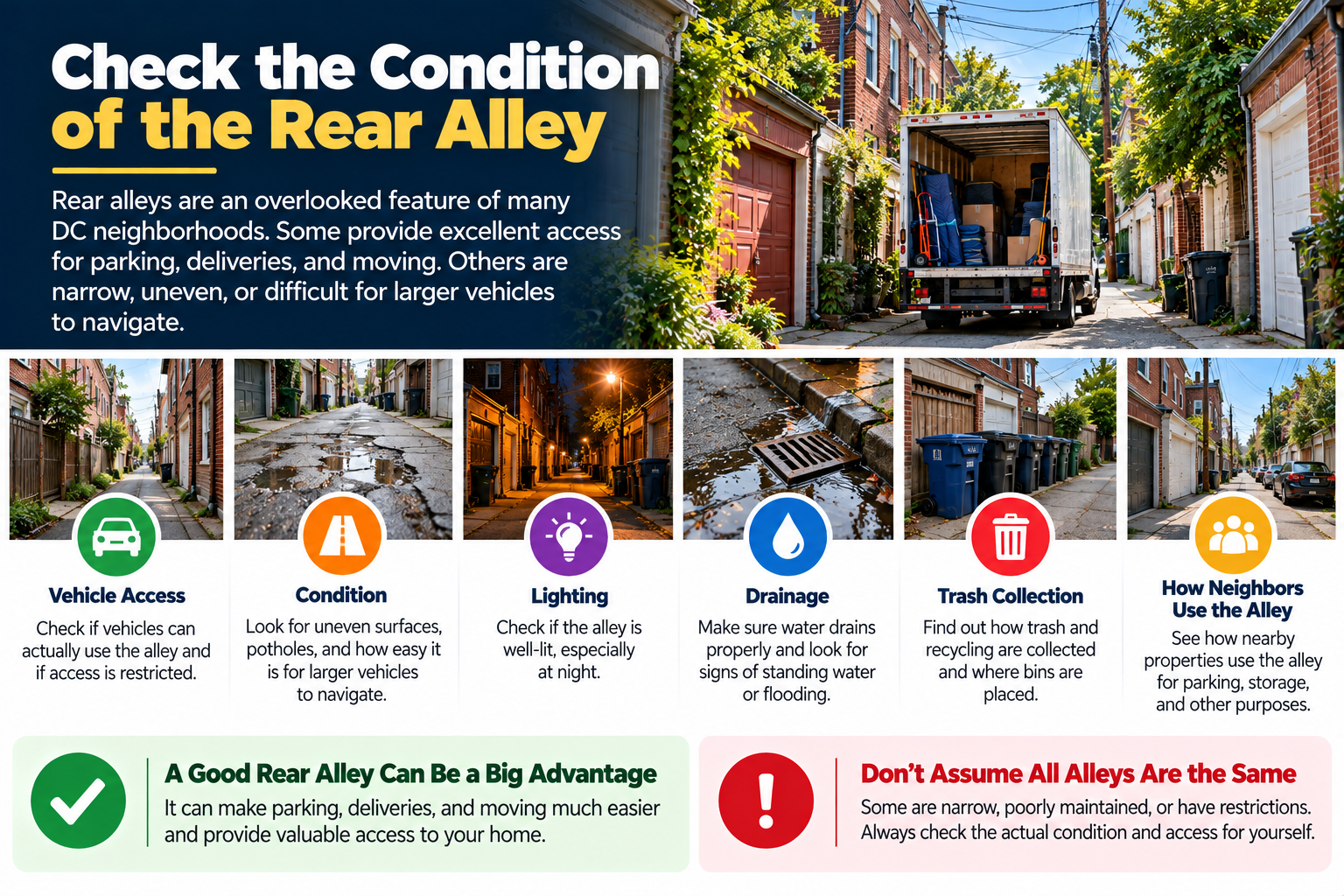
Rear alleys are an overlooked feature of many DC neighborhoods.
Some provide excellent access for parking, deliveries, and moving.
Others are narrow, uneven, or difficult for larger vehicles to navigate.
If the house has rear access, check whether vehicles can actually use it and whether access is restricted.
Also look at drainage, lighting, trash collection arrangements, and how neighboring properties use the alley.
9. Watch for Signs of Poor Renovation Work
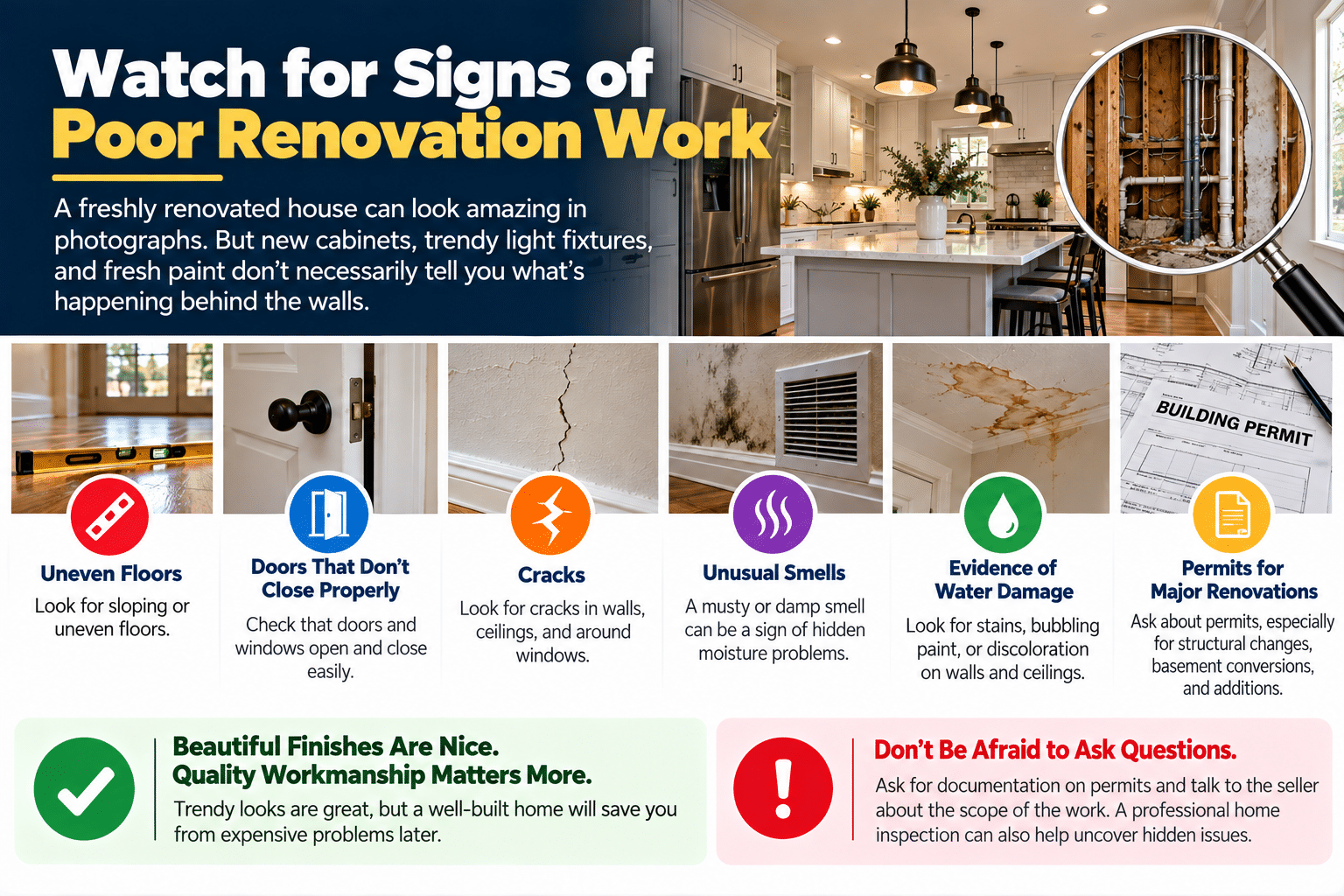
A freshly renovated house can look amazing in photographs.
But new cabinets, trendy light fixtures, and fresh paint don’t necessarily tell you what’s happening behind the walls.
Pay attention to uneven floors, doors that don’t close properly, cracks, unusual smells, and evidence of water damage.
Ask about permits for major renovations, especially structural changes, basement conversions, and additions.
Beautiful finishes are nice. Quality workmanship matters more.
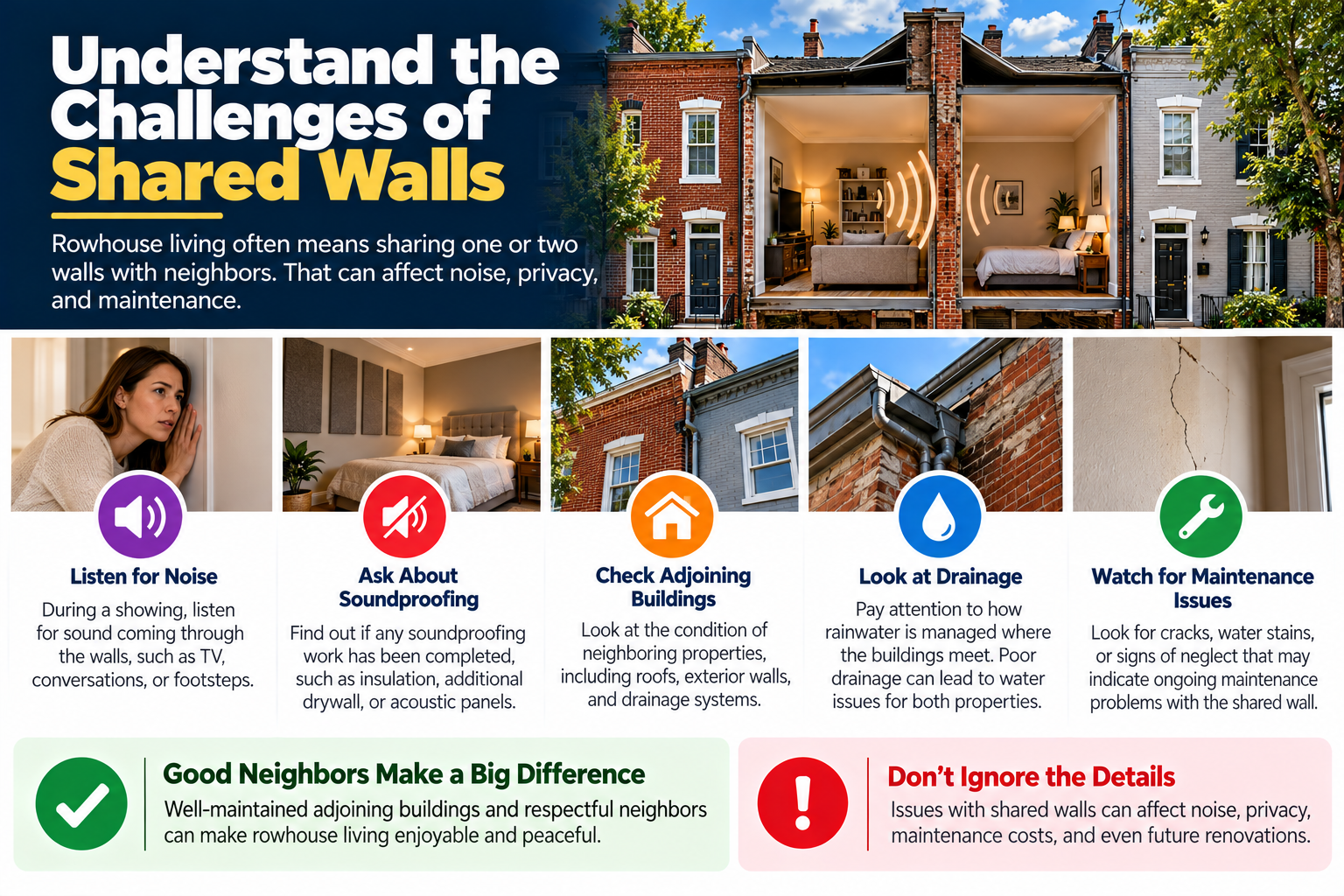
10. Understand the Challenges of Shared Walls
Rowhouse living often means sharing one or two walls with neighbors.
That can affect noise, privacy, and maintenance.
During a showing, listen for sound coming through the walls.
Ask whether major soundproofing work has been completed.
Also pay attention to the condition of adjoining buildings, especially where roofs, exterior walls, or drainage systems meet.
11. Look Closely at the Roof and Drainage
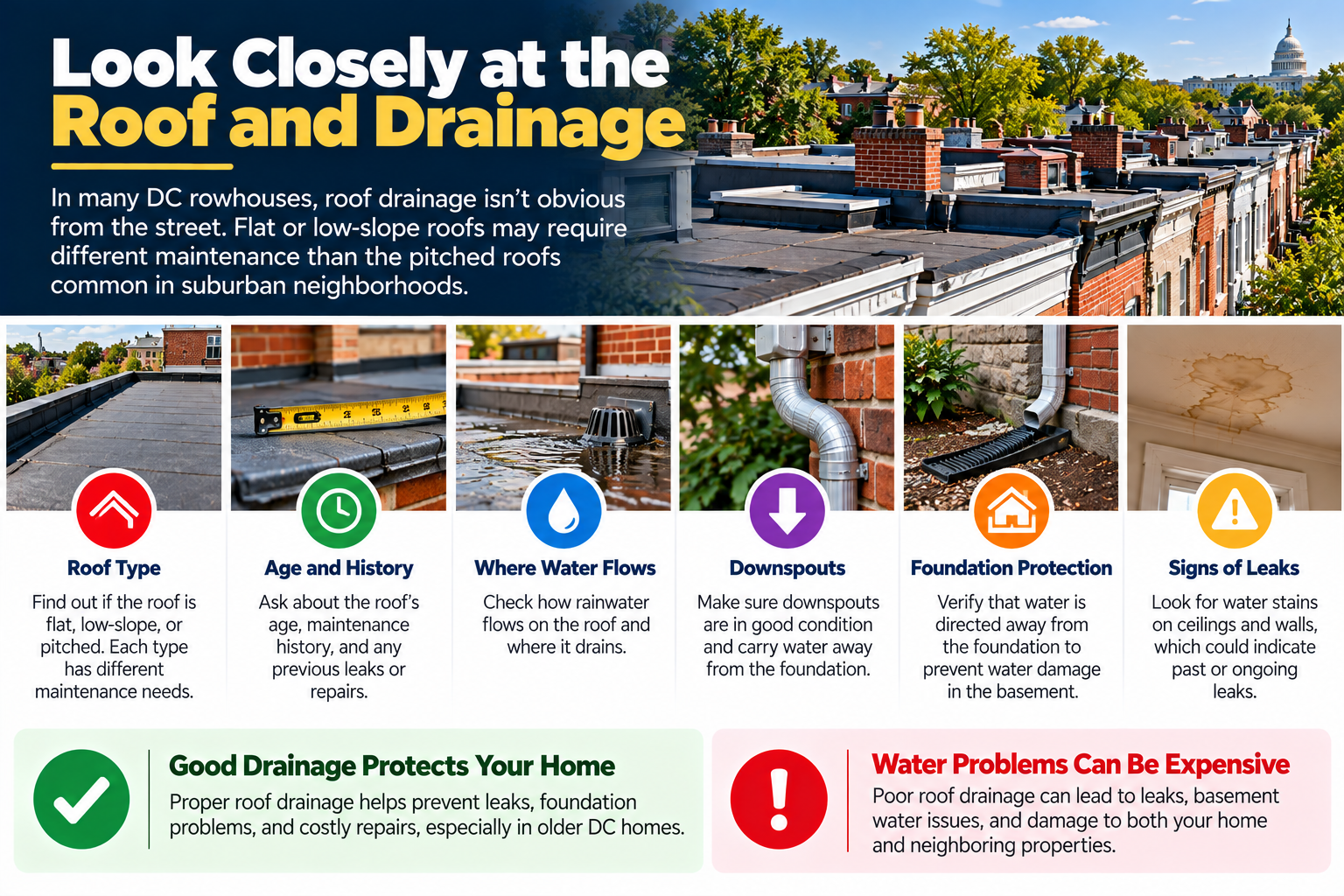
In many DC rowhouses, roof drainage isn’t obvious from the street.
Flat or low-slope roofs may require different maintenance than the pitched roofs common in suburban neighborhoods.
Ask about the roof’s age, maintenance history, and previous leaks.
Check where rainwater flows and whether downspouts carry water away from the foundation.
Water management deserves special attention in older urban homes.
12. Consider the Outdoor Space You’ll Actually Use
A small backyard, patio, rooftop deck, or front porch can be incredibly valuable in DC.
But bigger isn’t always better.
Think about privacy, sunlight, maintenance, drainage, and access.
A small, comfortable patio that you’ll use every weekend may be more valuable to your lifestyle than a larger yard that requires constant upkeep.

13. Check Your Internet and Cell Reception
Thick masonry walls, basement rooms, and the layout of older buildings can affect wireless signals.
If you work from home, check cell reception inside the house and ask which internet providers serve the address.
Think about where your home office would be located and whether the connection will meet your needs.

14. Don’t Forget About Moving-Day Access
This is something many buyers don’t think about until they’ve already purchased the home.
Washington, DC, has plenty of properties with difficult moving access.
Some have steep exterior stairs. Others have narrow front doors, limited loading areas, or long distances between the street and entrance.
Before buying, imagine bringing in:
- Your refrigerator and washer/dryer
- Your largest couch or sectional
- Your king-size mattress
- Your dining room table
- Your heaviest furniture
If access is difficult, moving and future deliveries may require additional planning or specialized equipment.
At Movers On Duty, we’ve learned that the distance from the truck to the front door can be just as important as the distance between your old home and your new one.

15. Choose a Home That Fits Your Lifestyle, Not Just Your Budget
A home can check every box on paper and still be the wrong fit.
Maybe the kitchen is beautiful, but there’s nowhere to store your groceries.
Maybe the basement looks perfect, but it feels damp.
Maybe the bedrooms are spacious, but the stairs are difficult.
Or maybe the location is fantastic, but parking is a daily headache.
Think about your everyday routine.
Where will you unload groceries? Where will guests park? Where will you keep your bicycle? Can you comfortably work from home?
The best house isn’t necessarily the biggest or most recently renovated.
It’s the one that makes everyday life easier.
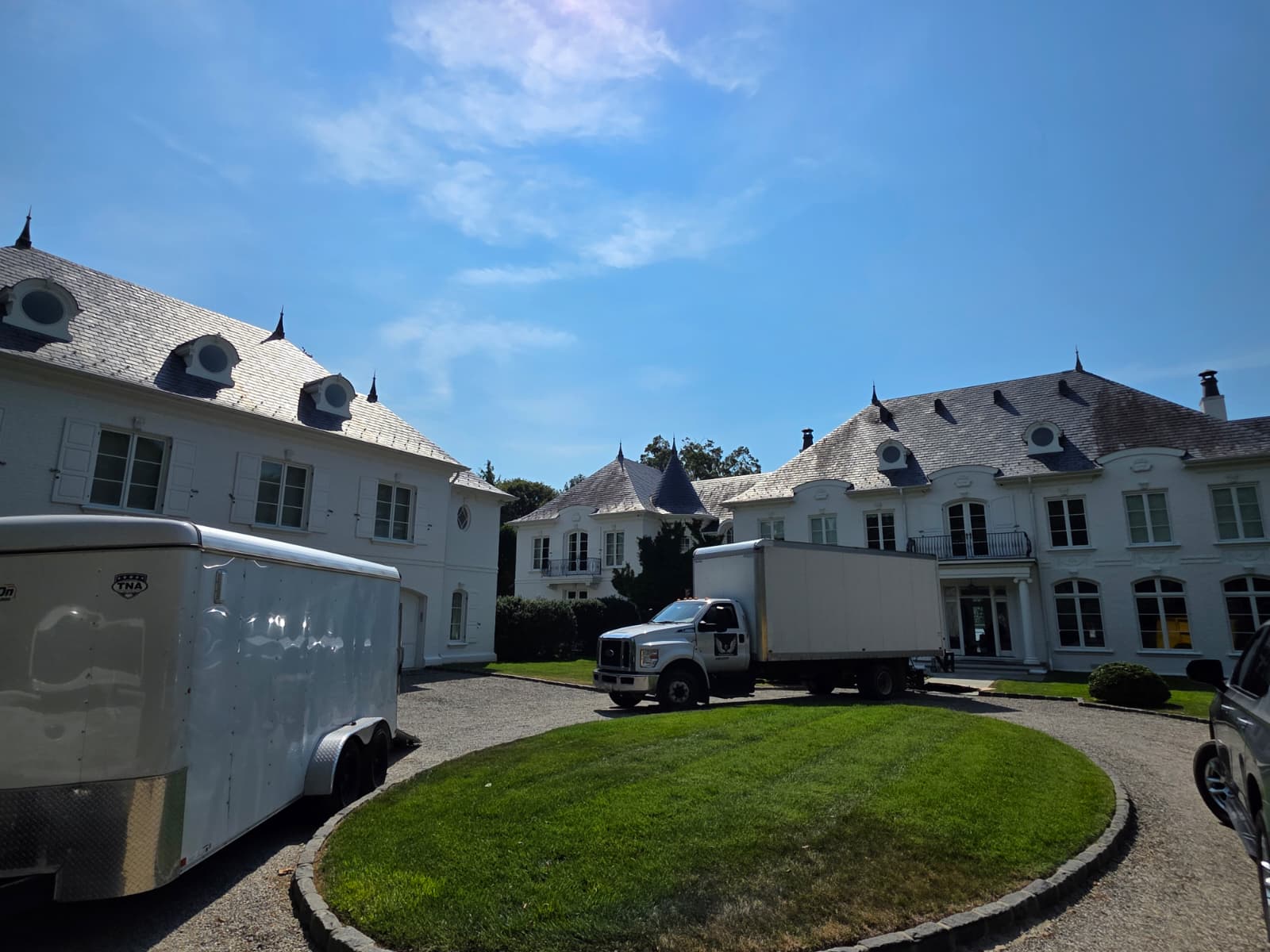
Bonus: A Moving Company’s Advice to DC Homebuyers
Here’s one final tip that doesn’t get mentioned enough:
Before making an offer, think about how everything you own will physically enter the property.
We’ve seen beautiful homes where moving large furniture requires careful planning because of tight staircases, narrow hallways, limited parking, or challenging entrances.
This doesn’t mean you should avoid those homes.
It simply means you should understand the limitations before purchasing.
Take measurements. Photograph the entrances and staircases. Consider whether your existing furniture fits the space and the route to reach it.
A little planning now can prevent expensive surprises later.


Final Thoughts: Buy the House You Can Actually Enjoy Living In
Washington, DC, offers incredible neighborhoods, historic architecture, walkable communities, and homes full of character.
But buying a home here requires looking beyond the listing photographs.
Pay attention to how the house functions, how accessible it is, and what everyday life will look like once you move in.
And when you’re ready to move, Movers On Duty is here to help.

We provide professional moving services throughout Washington, DC, Maryland, and Northern Virginia, with careful furniture protection and clear pricing.
Our goal is simple: help you enjoy your new home without unnecessary moving-day surprises.
Get an exact moving quote from Movers On Duty.
As long as your moving details stay the same, your quoted price stays the same.

Frequently Asked Questions About Buying a House in Washington, DC
Are DC rowhouses difficult to move into?
Some can be. Narrow staircases, small entrances, steep steps, and limited parking can make moving more complicated. Measuring furniture and access points beforehand can help.
What should I look for in an older DC home?
Pay attention to moisture, roof drainage, foundation conditions, electrical and plumbing systems, renovation quality, and practical floor plans.
Is parking important when buying a house in DC?
It depends on your lifestyle, but if you own a vehicle, parking availability and access can significantly affect daily convenience.
Do I need a parking permit for a moving truck in Washington, DC?
Temporary parking arrangements or permits may be necessary when reserving curb space for a moving truck. Check current requirements with the DC Department of Transportation.
What is the most overlooked issue when buying a DC rowhouse?
There isn’t one answer for everyone, but furniture accessibility, storage, natural light, water intrusion, and parking are easy to underestimate during a showing.