Do Smaller Trucks Have to Stop at Weigh Stations? (2026 Update)
If you’ve ever found yourself behind the wheel of a box truck or any commercial vehicle smaller than those massive 18-wheelers, you might have wondered whether you need to pull into weigh stations.
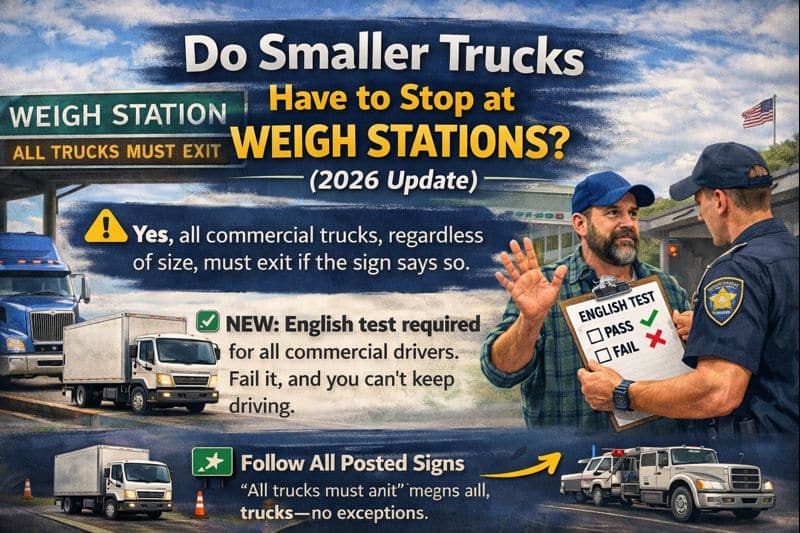
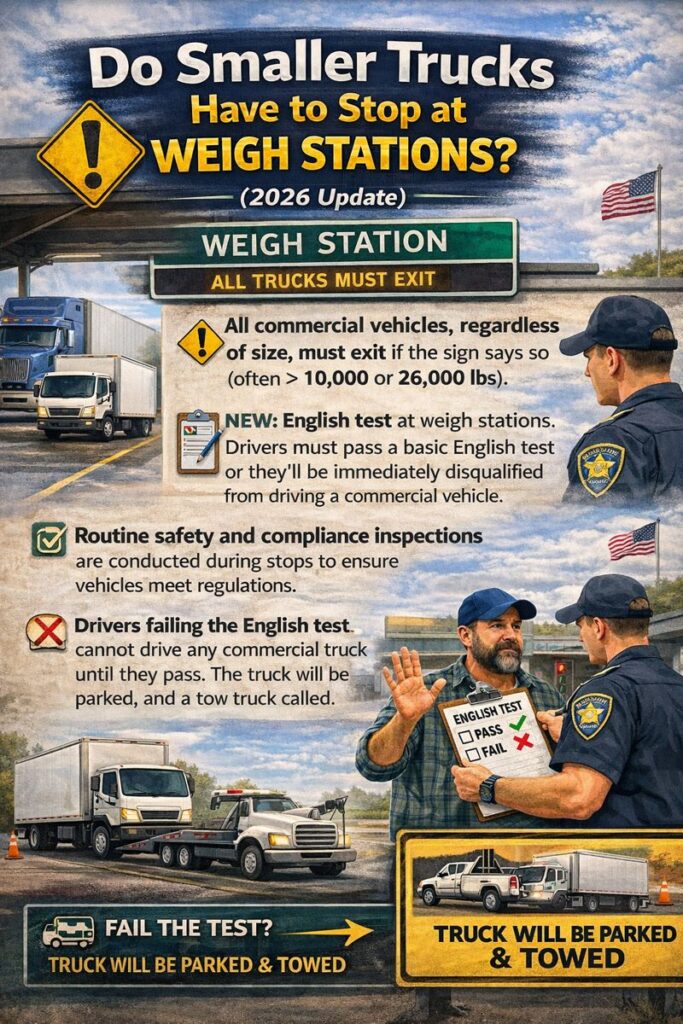
The short answer is yes: if there’s a sign on the highway that says “All trucks must exit,” that means all trucks—regardless of size—should head into the station.
Why All Trucks Means All Trucks
Traditionally, weigh stations have been associated with big rigs, but many states require any commercial vehicle over a certain weight—often starting as low as 10,000 or 26,000 pounds—to stop. As of 2026, this rule is even more inclusive. If the sign says all trucks must exit, then yes, even smaller commercial vehicles have to comply.
Driving Past an Inspection Station Without an Updated Logbook Is a Bad Idea
One of the biggest mistakes a commercial driver can make is approaching or passing an inspection or weigh station without an updated logbook. This applies whether you use an electronic logging device (ELD) or a paper logbook.
Why Logbooks Matter at Inspection Stations
Inspection stations don’t just check weight. Officers are also looking at hours of service, driver fatigue, and legal driving limits. Your logbook is how they verify all of that. If your logs are missing, outdated, or don’t match your actual driving time, it’s a major red flag.
What Happens If Your Logbook Isn’t Updated
If you’re stopped at an inspection station and your logbook isn’t current, several things can happen:
You can be placed out of service immediately
The truck may be parked on the spot
Fines and citations can be issued
Your company’s safety record can be affected
In serious cases, the load may be delayed or transferred
Trying to drive past an inspection station to avoid this only makes things worse. Officers are trained to watch for that behavior, and penalties are usually more severe if they believe you were trying to bypass inspection.
Electronic Logs Are Not Optional Excuses
Many drivers assume that because they use an ELD, they don’t need to worry. That’s wrong. ELDs must be:
Working properly
Fully synced
Up to date
Available for inspection immediately
If your ELD is malfunctioning and you don’t have the required backup logs, you can still be cited.
The Bottom Line
Always keep your logbook current
Never try to skip an inspection station
Logbook violations are easy to catch and hard to explain
An updated logbook protects you, your job, and your company
In today’s enforcement climate, weigh and inspection stations are about more than weight. They are full compliance checkpoints. Showing up unprepared is one of the fastest ways to get shut down.
Driving Past an Inspection Station Without an Updated Logbook will get you in trouble!
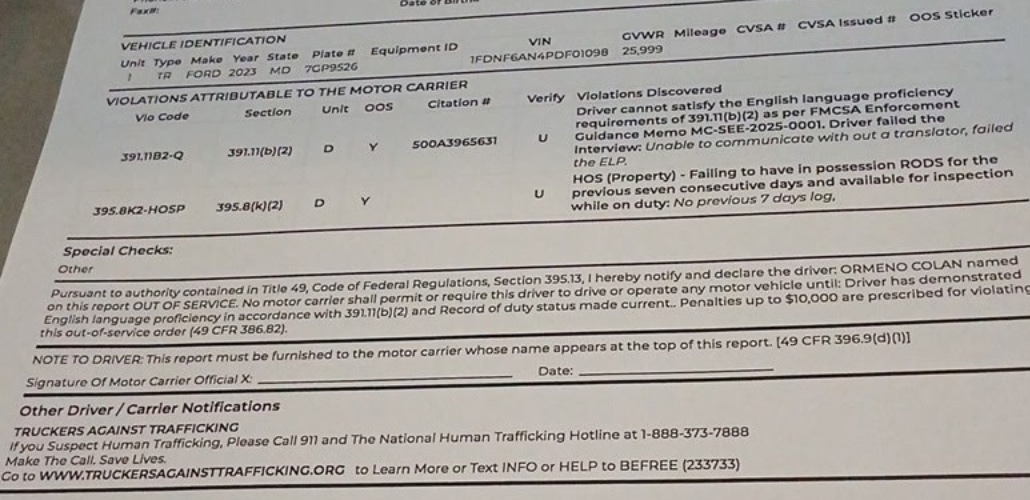
The New 2026 Twist: An English Test for Drivers
What’s new as of 2026 is that weigh stations now include a language proficiency check. Once you pull in and have your vehicle weighed or inspected, the driver will need to pass a basic English test. This isn’t meant to be complicated—just a simple check to ensure the driver can communicate in English at a basic level.
Consequences of Failing the Test
If a driver can’t meet this language requirement, they won’t be allowed to continue driving the commercial vehicle. In other words, the truck will be stopped, and the driver won’t be able to operate it until they can demonstrate the required English skills. This rule applies to all commercial drivers, regardless of what industry they’re in.
Key Takeaways for 2026
Always follow the signs. If it says all trucks must stop, that includes you, no matter the truck size.
Expect a language check. Weigh stations now include a basic English test for all commercial drivers.
No English, no driving. If you can’t speak English at a basic level, you won’t be allowed to keep driving a commercial vehicle.