The Ultimate Moving Guide: How Movers On Duty Can Make Your Move Stress-Free
Moving can be one of life’s most stressful events, but with the right movers, it doesn’t have to be. At Movers On Duty, we take pride in providing top-tier moving services that turn a potentially overwhelming experience into a seamless transition.
How to Pack for a Move in a Month — A Simple Week-by-Week Plan
A Clear Plan to Stay Organized and Avoid Last-Minute Stress
Packing for a move in just one month might sound stressful if you didn’t hire movers that pack for you, but with the right plan, it’s completely manageable. You’re already here; you got this!
At Movers On Duty, we’ve helped thousands of people move, and one thing is always true:
The people who follow a simple plan have the smoothest moves.
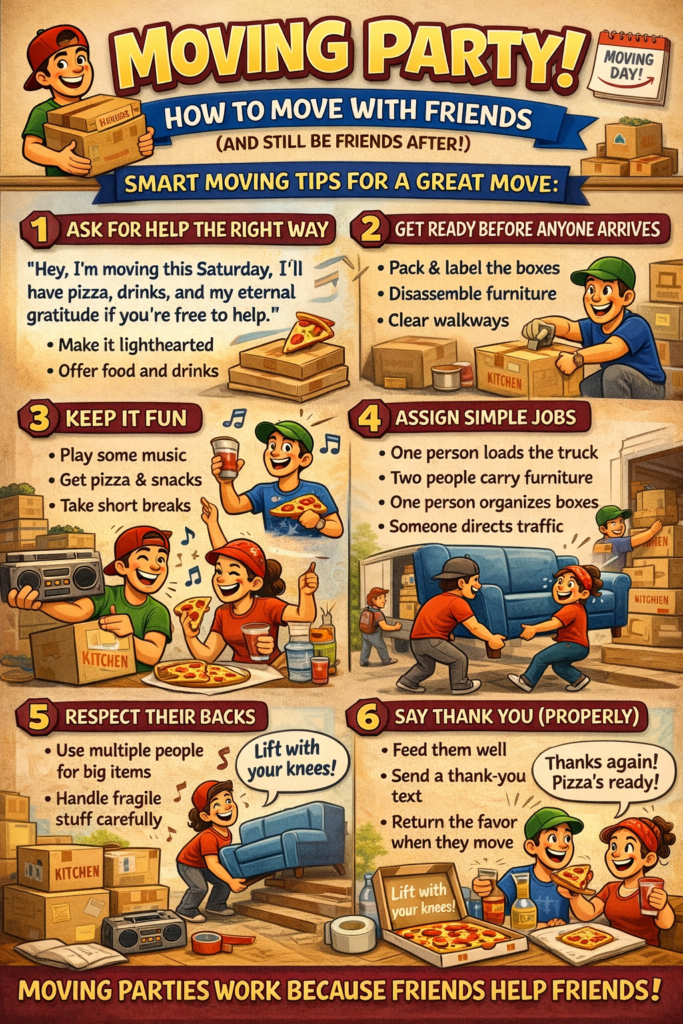
Moving Party: How to Move With Friends (and Still Be Friends After)
Moving is one of those things everyone has to do… and almost nobody enjoys. Boxes everywhere. Furniture that somehow got heavier overnight. And the famous question: “How did we accumulate this much stuff?”
For many people, hiring professional movers simply isn’t in the budget. That’s where the classic moving party comes in. It’s an old-school solution that still works today: invite a few good friends, promise them food, play some music, and tackle the move together.
If you’re going to do a moving party, here’s how to do it the right way.
Step 1: Ask for Help the Right Way
A moving party only works if people actually want to show up.
Be honest and lighthearted when asking. Something like:
“Hey, I’m moving this Saturday. I’ll have pizza, drinks, and my eternal gratitude if you’re free to help.”
Most friends are happy to help if they know you appreciate them and if the vibe is relaxed.
Step 2: Be Prepared Before Anyone Arrives
Nothing kills a moving party faster than everyone standing around while you start packing.
Before your friends show up:
Pack almost everything
Label your boxes
Disassemble furniture if possible
Clear walkways
Have supplies ready (tape, bags, markers)
Your friends are there to help move, not watch you figure out where the tape is.
Step 3: Make It Fun
It’s called a moving party for a reason.
Add a few simple things to make the day better:
Play music
Have snacks and drinks available
Order pizza or lunch
Take short breaks
The goal is to keep energy up and spirits high.
Step 4: Give People Simple Jobs
Chaos happens when ten people try to move the same box.
Assign basic roles like:
One person loading the truck
Two people carrying furniture
One person organizing boxes
Someone directing traffic
A little structure makes everything move faster.
Step 5: Respect Your Friends’ Backs
Not everyone needs to carry the heaviest item in the house.
Lift smart:
Use two or three people for big items
Protect fragile items
Take breaks when needed
Nobody wants a moving party that ends with a trip to urgent care.
Step 6: Say “Thank You” (Properly)
Your friends gave you their time and energy. That matters.
Ways to show appreciation:
Feed them well
Send a thank-you message afterward
Return the favor when they move
Moving parties work because friends help friends.
The Truth About Moving Parties
Moving with friends may not be perfect. There may be a couch that refuses to fit through the doorway. Someone will ask, “Why didn’t we measure this?” And at least one person will question their life choices halfway through.
But when it’s done, you’ll have your new place set up and a story to laugh about later.
And sometimes, that’s exactly what moving should be about.
How to Properly Wrap and Protect Your Bed Before Moving
A Simple Guide to Keep Your Mattress and Bed Frame Safe
Your bed is one of the most used pieces of furniture in your home. It’s also one of the easiest items to damage during a move if it isn’t protected the right way.
Moving can feel overwhelming, but with the right plan, it doesn’t have to be. As a professional moving company, Movers On Duty has seen firsthand how a clear, structured checklist can turn a stressful relocation into a smooth, well-managed experience.
We’ve created a step-by-step moving checklist designed specifically for Movers On Duty clients — covering everything from two months before moving day to the moment you settle into your new home.
Use this guide as a framework and adjust the timeline as needed to stay organized and in control throughout your move.