

What Happens to a Tenant’s Belongings During an Eviction in Maryland?
This is one of the most common questions we get after a landlord or property manager books an eviction with us:
“What happens to the tenant’s stuff once it’s removed from the property?”
The short answer is: it depends on the county.
Maryland eviction procedures are not the same everywhere, and knowing the difference ahead of time helps avoid confusion, delays, and unexpected costs.
Below is a clear breakdown, starting with Frederick County and comparing it to other major counties like Montgomery and Prince George’s.
Frederick County, Maryland (and Most Maryland Counties)
Since we are based in Frederick County, we’ll start here.
In Frederick County—and in most counties across Maryland—the eviction process works like this:
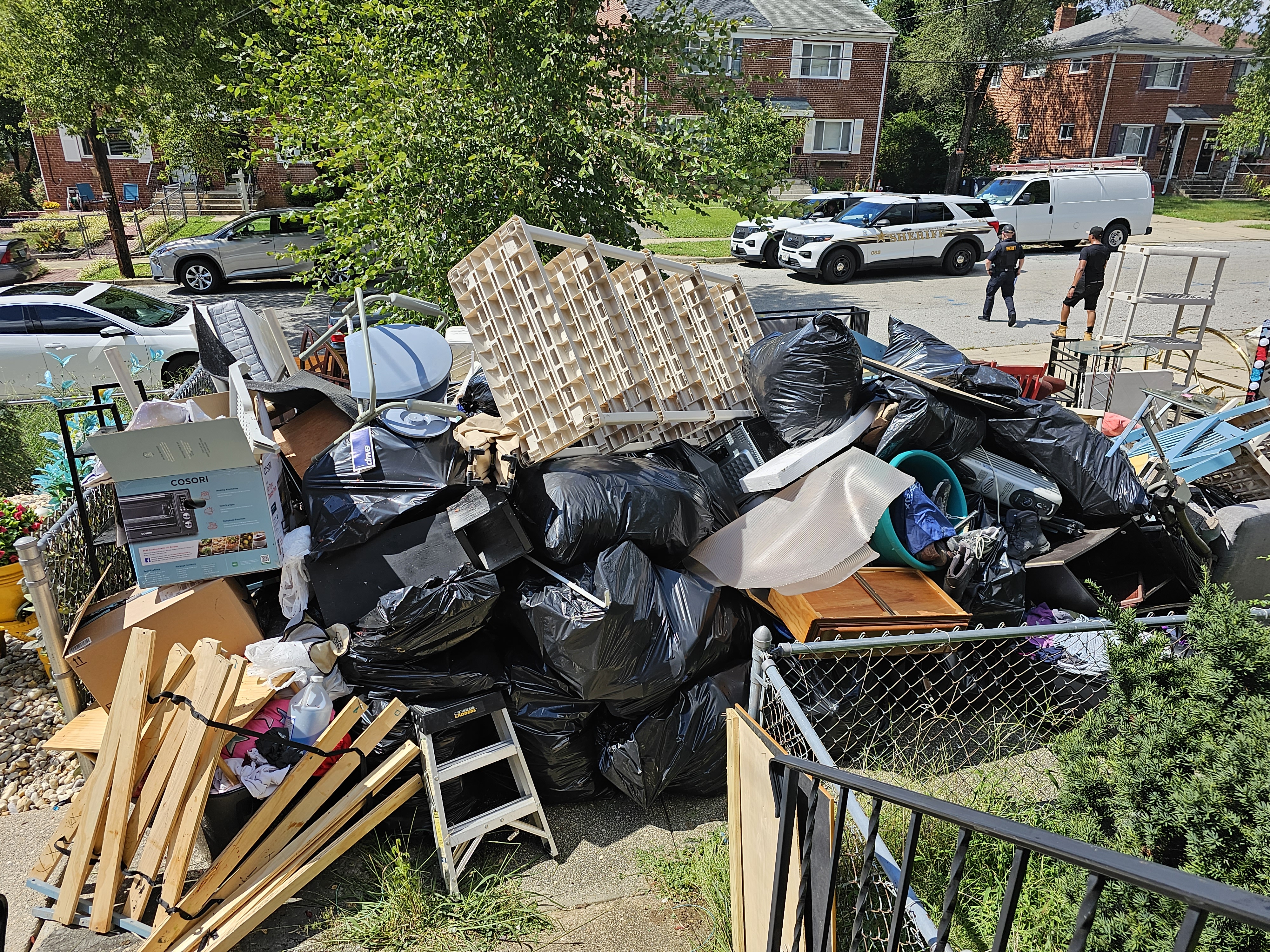
On eviction day, all belongings are removed from the property and placed outside.
The items may be placed in the front yard, driveway, or at the curb.
The deputy or constable overseeing the eviction tells us exactly where the items must go.
Once everything is outside, the eviction is considered complete. At this point our eviction movers must leave the area.

Tenant Access to Belongings
By county law, in most Maryland counties:
The tenant has up to 24 hours to retrieve their belongings.
During that 24-hour period, the items cannot be removed or discarded.
After the 24 hours:
Anything left behind becomes the landlord’s responsibility.
At that point, landlords often choose to hire a junk removal service to dispose of what remains.
Montgomery County: The Box Truck Difference
Montgomery County follows a similar eviction process, but with an important difference.
In Montgomery County:
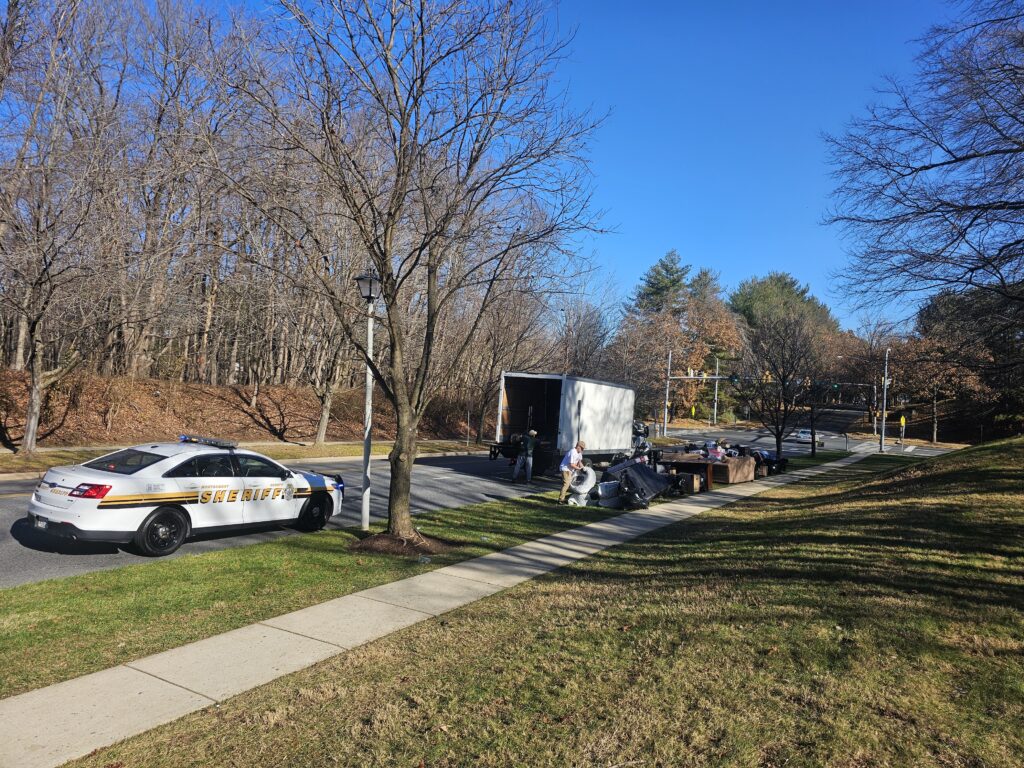
The landlord or property manager is often required to provide a box truck.
Sometimes, belongings are placed directly outside the property, just like other counties.
Other times, the constable will require the belongings to be:
Loaded into the box truck
Driven to a designated public roadway
Unloaded there instead of directly at the property
This requirement is specific to Montgomery County and is one of the biggest reasons evictions there require extra planning.
Prince George’s County (PG County): The 4-Hour Rule
Prince George’s County has one major exception that landlords should be aware of.
In PG County:
The tenant only has 4 hours to retrieve their belongings after the eviction.
After those 4 hours, the landlord may legally remove or dispose of the remaining items.
This is very different from the 24-hour rule used in most other Maryland counties, and it often surprises landlords who are not familiar with PG County procedures.

Carroll County : The 72-Hour Rule
In Carroll County
The tenant has 72 hours to retrieve his/her stuff after the eviction.
After those 72 hours, the property manager or landlord may legally hire our junk removal services.
Why This Matters for Landlords and Property Managers
Evictions are already stressful. Knowing what happens to the belongings—and when you’re allowed to act—helps you:
Stay compliant with county laws
Avoid liability issues
Plan for junk removal if needed
Prevent delays on turnover and re-renting
At the end of the day, county rules matter, and working with an eviction team that understands those differences makes the process smoother.
If you have questions about a specific county or want help planning an upcoming eviction, this is exactly what we do—day in and day out.